Turning the play corner of a child's bedroom into a dedicated study space is no easy task: it requires a combination of functionality, modern design and current trends in one space, taking into account not only the room available, but also our children's tastes.
Children grow up, their habits and needs change, and so does the space where they spend most of their time: their bedroom.
The corner our children once loved as a place to play gradually gives way to a study area, and this much-loved part of their bedroom takes on a different purpose.
The challenge, then, is to transform that space into a multifunctional study corner, while keeping it welcoming and suited to our children's many needs.
Creating a dedicated study area that meets our children's needs and tastes, reflects modern interior design trends and fits seamlessly with the rest of our home is no easy task.
Let's explore some practical tips for creating a functional, modern space.
Three practical tips for a practical, modern study corner
There are many things to consider when furnishing a study area for our children, including:
- the right location
- choosing a desk and chair
- using practical accessories
- choosing the right colours
Let's take a closer look at each one.
Choose the right location
Where is the best place to set up a study area in your child's bedroom?
There are many options: you can dedicate an entire wall to it, make use of a corner, position it under a raised bed or bunk bed, or extend an existing piece of furniture, such as a bookcase, by adding a wall-mounted unit.
Whatever location you choose, ideally you should place the study area slightly to one side of or beneath a window so it benefits from natural light for most of the day.
Pay attention to which hand your child writes with: if they are left-handed, the window should be to the right of the desk, and vice versa, to avoid distracting shadows. (The same principle applies to the lamp)
Natural light is much gentler on children's eyes, helping to reduce eye strain while they study or do their homework.
It also means you don't have to leave the room light on for hours and can switch it on only when needed. It's a great way to save energy and use electricity more efficiently.
Research also shows that natural light in a workspace significantly benefits productivity and morale, an important psychological factor to consider for our children's mental health.

Pay attention to the desk and chair
One piece of furniture that deserves careful consideration is the desk, which should be more than just a surface to work on.
The desk needs to be the right height so children can use a computer, write or read with good posture and without straining their backs, as they will spend a lot of time at it each day.
When it comes to shape and materials, if you have plenty of space, we recommend a rectangular desk. This shape provides a generous surface with room for everything needed for studying, from a computer and notebook to a lamp and pen holder.
It can also be placed conveniently against a wall or even near a corner, while still leaving room to move around.
Another advantage of a rectangular desk is that two siblings can easily share it without feeling cramped or crowded.
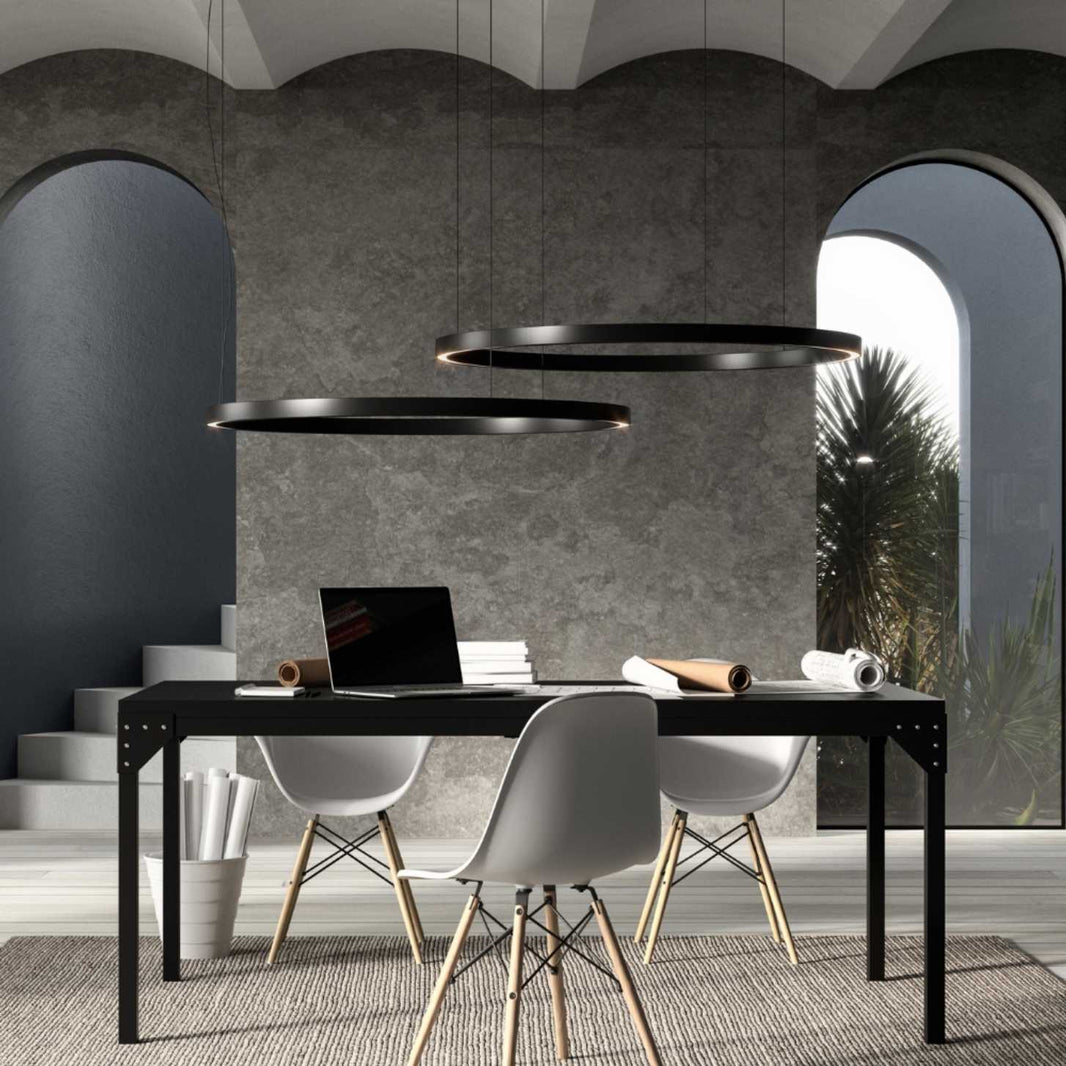
When it comes to materials, choose durable finishes that will stand the test of time. The ATOLLO desk table excels in this respect: its metal frame and poplar wood top make it highly durable and stable. The top also has a scratch-resistant lacquer finish, which gives the surface a smooth feel and protects it from scratches and abrasions.
It's an ideal choice for a children's study corner, where pencils, skirts and felt-tip pens call for a surface that is quick to clean and won't easily become damaged.

Another piece of furniture that makes a difference to a functional, comfortable space is the chair.
Choosing the right chair is essential to help children maintain good posture during study sessions. We recommend an ergonomic chair with an adjustable seat and backrest height. The backrest should provide proper support without being too rigid: soft padding and breathable upholstery are ideal.
Teenagers tend to prefer chairs with castors, as they make it easy to move from one side of the desk to the other.
Let's talk about space-saving furnishings: shelves come first
How much space do children need to organise everything for studying? Quite a lot.
Between books and notebooks, there never seems to be enough room!
Shelves are a great way to store school supplies and more.
Mounted on the wall and raised off the floor, they reduce clutter without taking up valuable desk space.
It's also worth considering the best materials for shelves: wooden shelves look beautiful and bring warmth to a room, but you can also choose metal shelves.
Easy to clean and highly durable, they are perfect for holding files, books and heavy dictionaries.
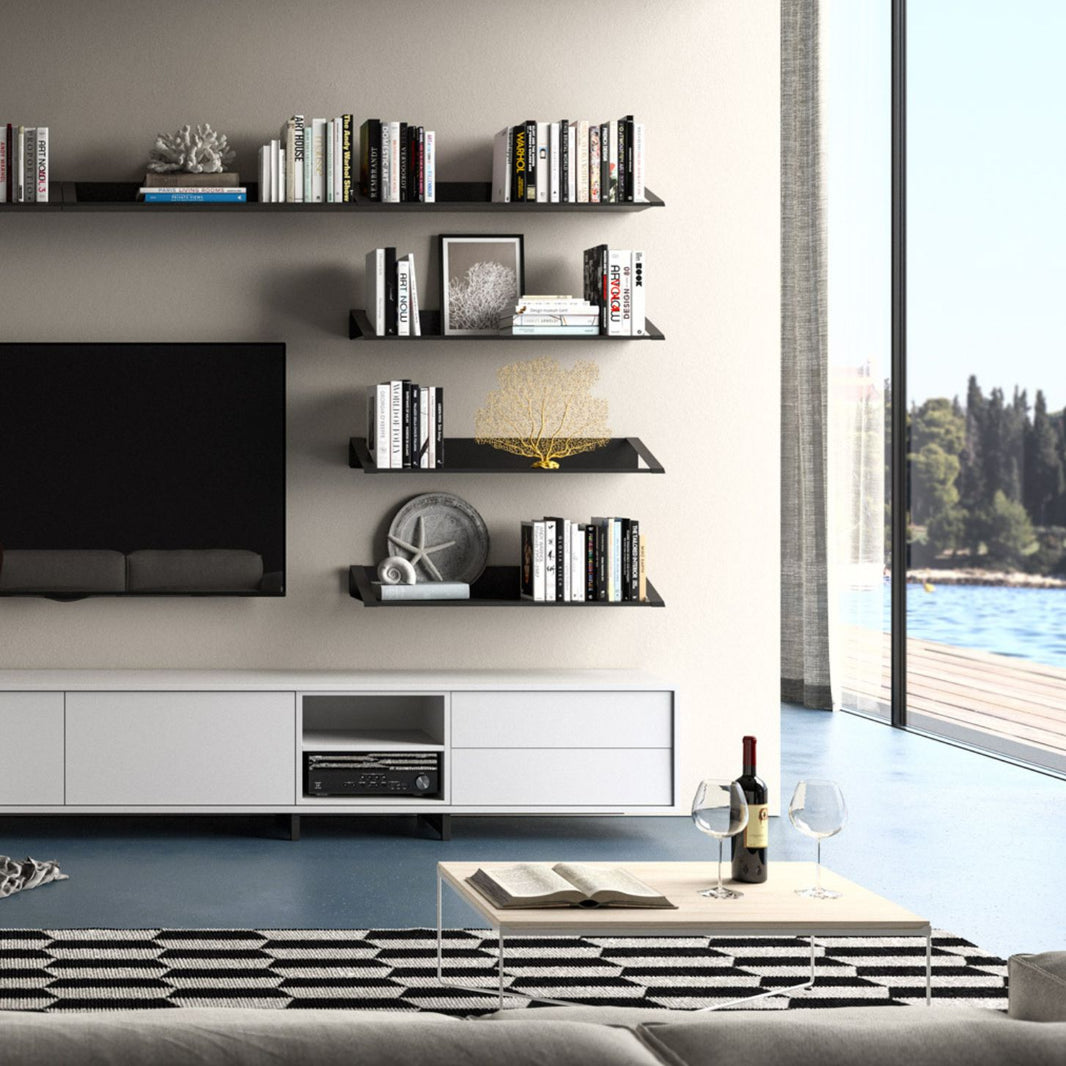
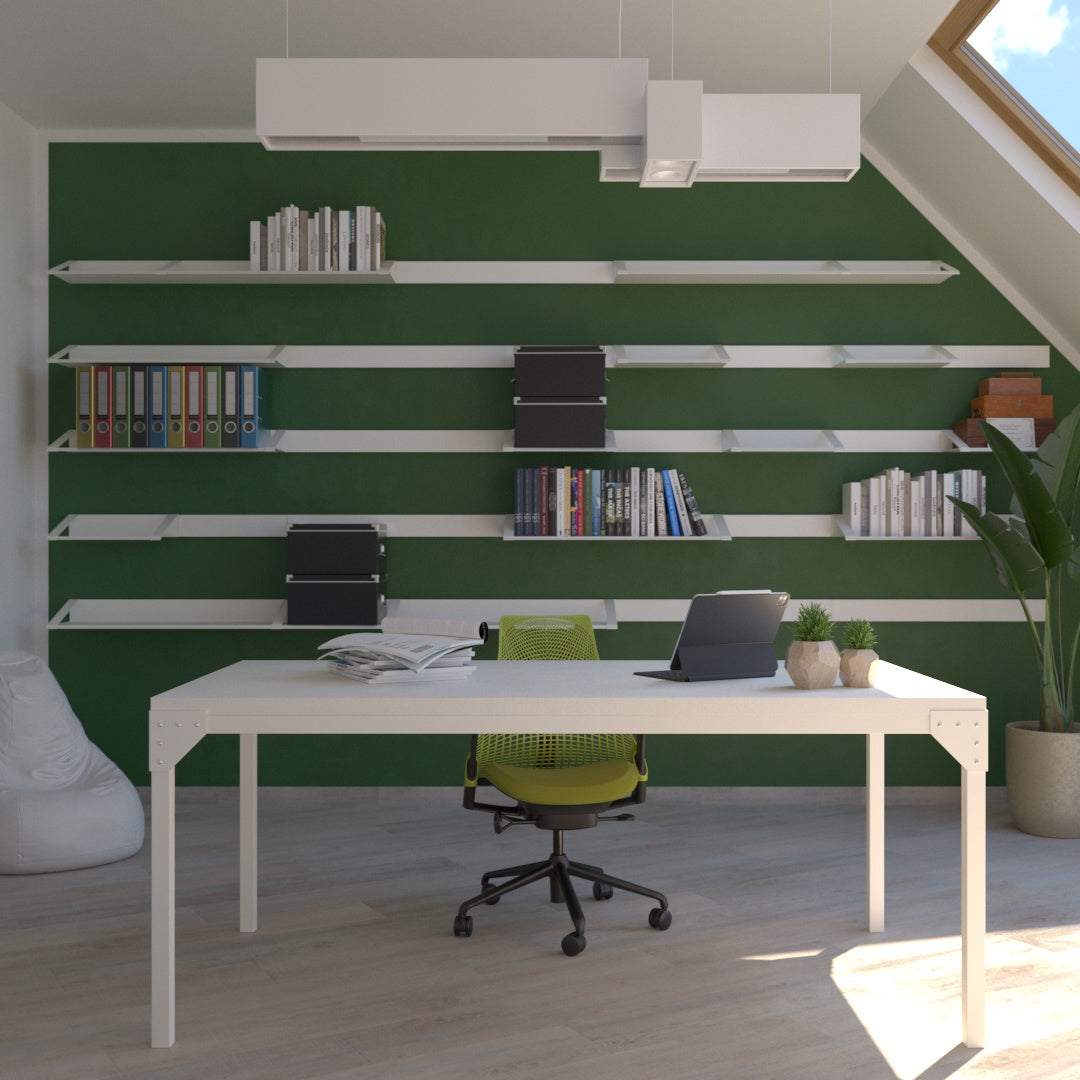
With the ORIZZONTE modular system, which consists of support bars in different sizes and metal wall shelves in a range of colours, you can create an exceptionally flexible, modular wall storage system.
ORIZZONTE lets you change the arrangement over time to suit your needs.
You can move the shelves along the support bar to create small spaces dedicated to the same subject, keep shelves with everyday textbooks within easy reach, and move those holding files and heavy notebooks higher up the wall.

The caps covering the ORIZZONTE support bars also have a magnetic metal surface, perfect for using magnets to display sticky notes and drawings or attaching other accessories to create a functional study area that adapts to your children's needs.
Don't overlook your choice of colours
At this point, it's worth giving some thought to the choice of colours.
The colours available in the world of interior design vary widely, of course: from neutral shades such as white and taupe to slightly brighter pastel shades such as light blue, blue and sage green, shades that evoke natural textures and bring a sense of peace and tranquillity to the room.
Paint the wall behind the desk your child's favourite colour; it could significantly improve their concentration. Being in a welcoming place they like and feel is their own can make study time feel less demanding and help them see that corner of the room differently: not necessarily as a place where they reluctantly spend their afternoons, but as a safe space to express their creativity.
Conclusion
We're confident these simple tips will help you see clearly and quickly which solutions work best for creating a functional study corner in your children's bedroom.
If you're still choosing the right desk and shelves, take a look at the collections in our shop, where you might find just what you need!